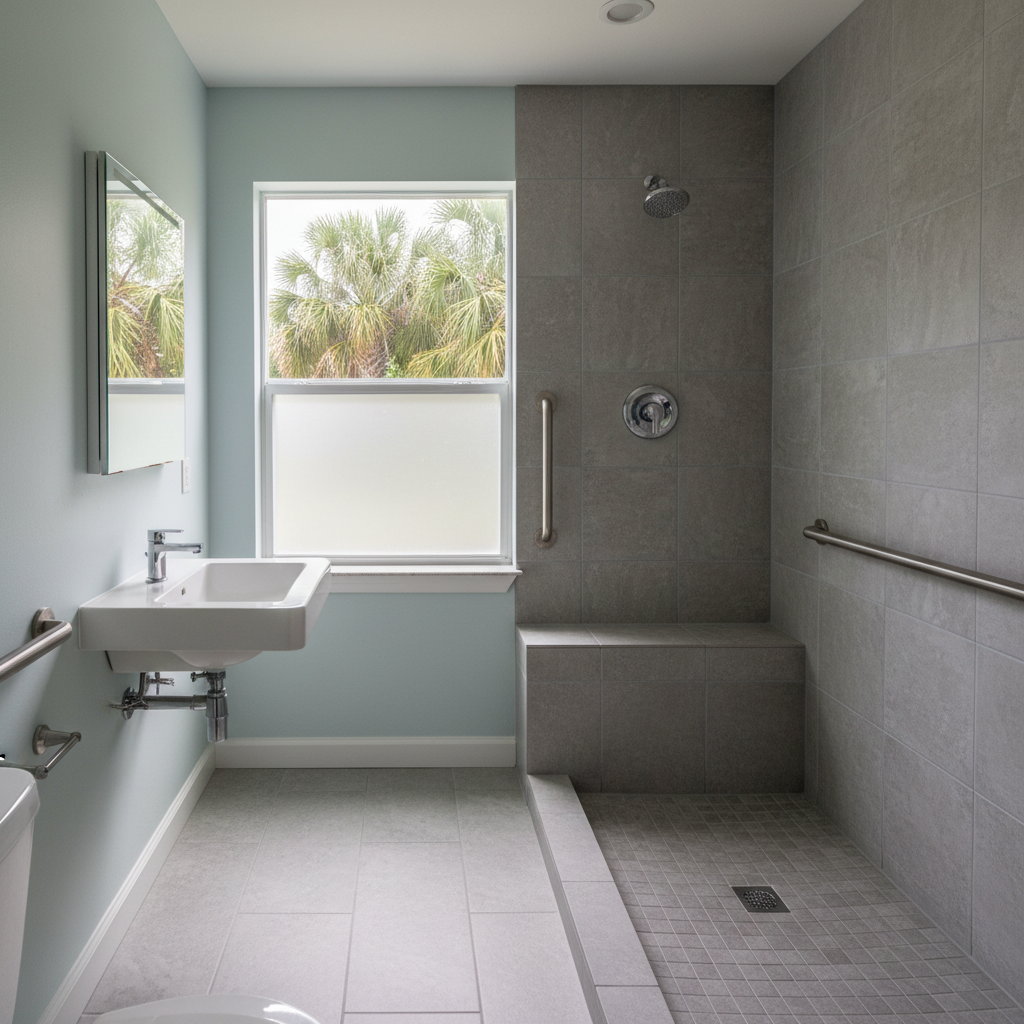
So, you’ve got a handicap-accessible bathroom, maybe we even built it for you. That’s a great step towards independence and safety. But just like anything else, it needs looking after. You can’t just install it and forget it, especially down here in Panama City where the humidity and salt air can really do a number on things.
Extending the Life of Your Accessible Bathroom
The main goal here is to keep everything functional and safe for as long as possible. We’re talking about components that are critical for daily living, so they need to be reliable. A lot of this comes down to simple, consistent care.
- Keep it Clean: This might sound obvious, but it’s more important in an accessible bathroom. Grab bars, shower seats, and commode risers get a lot of contact. Use mild, non-abrasive cleaners regularly. Avoid harsh chemicals that can degrade finishes, especially on metal grab bars or plastic seating surfaces.
- Check Fasteners: Grab bars are only as good as what they’re screwed into. Over time, due to use or even just house settling, screws can loosen. I always recommend checking them every few months. Give each grab bar a good tug – not enough to rip it off the wall, but enough to feel if there’s any play. If you feel movement, tighten those screws immediately. Don't wait until someone puts their full weight on it and it gives way.
- Mind the Moisture: Florida is humid, you know this. That constant moisture is a breeding ground for mold and mildew, which isn't just unsightly, it can degrade grout, caulk, and even the structural integrity behind your tile if it gets bad enough. Make sure your exhaust fan is working correctly and use it during and after every shower. Keep an eye on any areas where water tends to sit, like around the base of a roll-in shower or under a wall-mounted sink. Wipe these areas dry if you can.
- Lubricate Moving Parts: If you have a shower chair with wheels, a transfer bench, or even a toilet seat that’s designed to lift for cleaning, those moving parts benefit from occasional lubrication. A little silicone spray can go a long way to prevent sticking and squeaking.
What Regular Maintenance Looks Like
Think of it like a quick weekly check-up and a more thorough monthly or quarterly inspection.
Weekly:
- Clean all surfaces, especially grab bars and seating.
- Wipe down shower walls and floors to prevent mildew build-up.
- Ensure the exhaust fan is running properly.
Monthly/Quarterly:
- Test all grab bars for tightness.
- Inspect caulk and grout lines for cracks or signs of mold. Re-caulk as needed.
- Check the functionality of shower heads, especially handheld units, ensuring they dock securely and don’t leak.
- Look for any signs of rust on metal components, especially in areas near the coast where the salt air can be brutal on anything not specifically designed for marine use.
- Test any emergency call buttons or alarms if you have them installed.
Warning Signs of Problems
Don't ignore these. They're telling you something needs attention.
- Loose Grab Bars: This is a big one. Any wobble means it’s not safe.
- Cracked Grout or Peeling Caulk: These are open invitations for water to get behind your walls, leading to mold, rot, and expensive repairs. You’ll see this a lot in older homes in areas like St. Andrews, where foundations might shift a bit over the years.
- Rust or Corrosion: Especially on metal fixtures. This indicates moisture issues or that the finish is failing.
- Slow Drains: Can lead to standing water, which is a slipping hazard and can damage flooring.
- Persistent Musty Odor: A sure sign of hidden mold or mildew.
- Difficulty Operating Fixtures: If a faucet is hard to turn or a shower head is stiff, it could be a sign of mineral buildup or a failing component.
When to Call a Professional
Look, you can handle a lot of this yourself, but there are times when you need an expert. Don't try to be a hero and risk making things worse, or worse, risking someone’s safety.
- Major Leaks: If you see water stains on the ceiling below the bathroom, or a persistent drip that you can’t fix with a simple tightening, call us. Water damage is no joke.
- Structural Concerns: If you notice soft spots in the floor, bulging walls, or significant cracks in tile or drywall, especially around grab bars or wall-mounted fixtures, that’s a red flag. This could indicate water damage or a structural issue that needs immediate attention.
- Electrical Issues: Any flickering lights, outlets not working, or strange smells from electrical components should be handled by a licensed electrician, not a DIY project.
- Complex Fixture Repairs: If your specialized accessible toilet isn't flushing right, or a thermostatic shower valve is acting up, it's usually best to call in someone who knows these specific systems.
- Grab Bar Re-installation: If a grab bar has pulled out of the wall, don't just screw it back into the same holes. You need to ensure it's re-secured into solid blocking or with proper anchors. That’s a job for someone who understands wall construction and safety standards. That’s what we do at Panama City Bathroom Solutions.
Taking care of your accessible bathroom isn't just about aesthetics; it's about maintaining safety and independence. A little preventative maintenance goes a long way in avoiding bigger, more expensive problems down the road.